
Why Your School District Needs an Education Foundation
What a kindergarten rug taught one community about investing in every student
By Robin Callahan, CFRE, CAP®, CEFL
National Expert in K-12 Philanthropy, Author, and Speaker
In 1987, John and Maureen Shaw noticed that the rug in their son’s kindergarten classroom had seen better days. They offered to buy a new one. It seemed like the simplest gift a parent could give.
The answer surprised them. The district could not easily accept their gift. If parents at one school could buy extras for their classroom, students at schools with fewer resources would fall further behind.
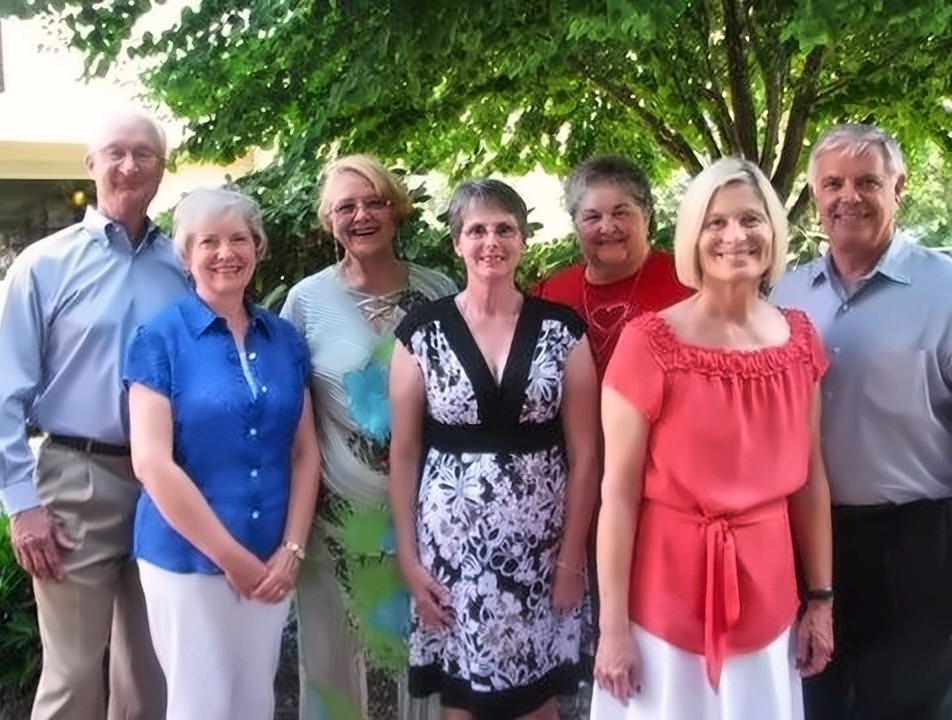
The Shaws didn’t walk away. They recruited eight board members and founded the Issaquah Schools Foundation. Their goal was to learn what students needed and rally the whole community to meet those needs, in every school.
That worn-out rug launched a foundation that has since raised more than $30 million for students in the Issaquah School District.
Why This Story Is Personal
I joined the Issaquah Schools Foundation board in 1998. As a parent volunteer, I had noticed how much the private funding raised at each school varied. Some schools could raise far more than others. I wanted every student to have the same shot at opportunity.
I became executive director in 2002 and led the foundation until 2016. During those years, a remarkable team of staff, board members, district leaders, and community partners grew the foundation from one part-time employee running two programs to a team of 12 staff and contract employees. Together we managed a $1.8 million annual budget and more than 30 programs.
A few of those programs show what a foundation makes possible:
- VOICE Mentor Program. Launched in 2004 with 12 mentors and 15 students, VOICE grew to serve every school in the district. Today the district runs it, and more than 500 students have a caring adult in their corner.
- TEALS computer science. Issaquah was an early partner when Microsoft employees Kevin Wang and Jim Stanton (also an ISD parent) helped bring computer science professionals into high school classrooms. Foundation-funded stipends supported those volunteer teachers. TEALS is now a national program run by Microsoft Philanthropies.
- Fine Arts Fund. Launched in 2013, it opened fine arts opportunities to secondary students across the district like instrument rentals and repairs, music collections, and fine arts equipment and supplies.
- Cultural Bridges. This publication helps immigrant and multilingual families navigate their schools. Initially called Voz de la Comunidad, it is now published in eight languages
The work didn’t stop when I left. The foundation rallied the community to meet unique student and staff needs during the pandemic and since 2022, has funded Youth Mental Health First Aid training for more than 200 district staff members. That is one of the best things about education foundations. They adapt to meet their community’s most pressing needs.
- Lorem ipsum dolor sit amet, consectetur adipiscing elit.
- Cras nisl metus, tristique at dolor eu, finibus facilisis ex
- Nullam suscipit, est in egestas cursus, maximus quam
Public Funding Covers the Basics
The Issaquah Schools Foundation says it plainly: “State and federal dollars fund only the basics of education, but our students deserve much more than just the basics.”
Across the country, school funding blends local, state, and federal dollars. Because so much depends on local property taxes, districts in lower-income communities often have less to work with. Even within one school, families are often asked to pay for band, robotics, theater, sports, and travel. Students whose families can’t pay may miss out.
Budgets are especially tight right now. In a spring 2026 RAND survey, 54% of district leaders reported difficulty addressing budget shortages. Education Week reports that federal funding, roughly $1 of every $10 that pays for public K-12 schools, is uncertain this year.
An education foundation is not a substitute for adequate public funding. But it gives your community a way to do more for students, together.
What an Education Foundation Does
A strong education foundation does far more than raise money. It:
- Supplements school budgets with private dollars for programs that public funding can’t cover.
- Funds innovation by piloting new ideas, so the district can test what works before committing taxpayer dollars.
- Expands equitable access by directing resources to every school and to the students with the greatest need.
- Builds community connection as an advocate for public education, a positive storyteller for schools, and a bridge between schools and the people they serve.
- Responds quickly in a crisis. During the pandemic, education foundations provided technology for students learning at home, safety supplies, and food for families.
Thousands of Districts Are Missing Out
The National Association of Education Foundations estimates there were about 4,500 education foundations supporting K-12 public schools in 2024. Yet the National Center for Education Statistics counts more than 13,000 regular public school districts. That means thousands of communities have generous people, businesses, and alumni ready to help, with no clear way to invest in their schools.
Aenean tempor nulla felis, ut volutpat est auctor sit amet. Nam viverra, justo quis tempor tristique, sem sem tempus ligula, nec consequat nunc tellus at lorem. Duis pretium, nulla a faucibus maximus, enim odio pharetra arcu, sed pulvinar elit sem at odio. Phasellus urna sem, euismod a blandit et, convallis in nisi.
Aenean sit amet dui vitae tellus congue malesuada quis hendrerit purus. Aliquam condimentum, elit eu varius feugiat, purus velit pulvinar mauris, id dignissim sapien neque eu orci. Duis in porttitor ligula, vitae accumsan est. Proin non metus in nibh porttitor eleifend vel sit amet erat.
Five Lessons for Getting Started
If you’re a superintendent, school board member, or community leader exploring a foundation, here is what Issaquah taught me.
- Start with your why. Before you build a website or recruit a board, get clear on purpose. What is the greatest unmet need facing your students? Ask students, families, teachers, principals, district leaders, business leaders, and alumni. Asking for their input is also your first step in building support.
- Think district-wide. The Shaw’s’ rug showed how school-by-school giving can widen gaps. A foundation works alongside parent groups like PTSAs and Booster Clubs, which support individual schools, and directs resources where they matter most across the district.
- Partner closely with your district. Align your work with district priorities and student needs. The strongest foundations are trusted strategic partners, not separate silos.
- Plan to professionalize. In its first 14 years, the volunteer-led Issaquah Schools Foundation raised an average of about $56,000 a year. One year after hiring its first executive director, revenue reached $154,000. Within 4 years, it had grown to $300,000. Volunteers remain essential, but professional staff help build and sustain growth.
- Start now. An old saying reminds us that the best time to plant a tree was 30 years ago, and the next best time is today. The Issaquah Schools Foundation is nearly 40 years old. Your students will benefit for decades from the work you start this year.
It Starts With One Need
John and Maureen Shaw didn’t set out to build a foundation that would raise more than $30 million. They just wanted a better rug for a kindergarten classroom. When they hit a barrier, they found a way to help every student instead.
Every community has people who care about their schools. An education foundation gives that care a home.
Let's Keep the Conversation Going
What sparked the education foundation in your community? If your district doesn’t have one yet, what questions are holding you back? Share your story in the comments. I’d love to learn from you.
If you’re exploring whether an education foundation is right for your district, let’s talk.
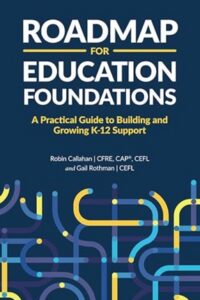
Want to go deeper? Roadmap for Education Foundations: A Practical Guide to Building and Growing K-12 Support, which I co-wrote with Gail Rothman, walks through every stage of starting and growing a foundation. Find it on Amazon.
About the Author
Robin Callahan, CFRE, CAP®, CEFL, is founder and president of The Callahan Collaborative and a national expert in K-12 philanthropy. She spent 18 years in leadership at the Issaquah Schools Foundation, served as executive director of the National School Foundation Association (now the National Association of Education Foundations) from 2016 to 2019, and was vice president of philanthropic services at the Greater Tacoma Community Foundation. She teaches in NAEF’s Certified Education Foundation Leader program. She is co-author of Roadmap for Education Foundations: A Practical Guide to Building and Growing K-12 Support and speaks nationally on education foundations, governance, and strategic planning.
Robin Callahan, CFRE, CAP®, CEFL, is founder and president of The Callahan Collaborative and a national expert in K-12 philanthropy. She spent 18 years in leadership at the Issaquah Schools Foundation, served as executive director of the National School Foundation Association (now the National Association of Education Foundations) from 2016 to 2019, and was vice president of philanthropic services at the Greater Tacoma Community Foundation. She teaches in NAEF’s Certified Education Foundation Leader program. She is co-author of Roadmap for Education Foundations and speaks nationally on education foundations, governance, and strategic planning.